Wood can make a bedroom feel warm and grounded, or it can make it feel brown and heavy. The difference rarely comes down to buying better furniture. It comes from how the wood tones relate to each other and to the floor, which textiles sit next to them, and whether the pieces are balanced around the room.
These 13 ideas treat wood as the foundation of the bedroom and work mostly with the furniture you already have, whether that is a honey oak set from a relative, a dark cherry dresser or a mix of secondhand finds. You will find ways to read undertones, use earthy textiles as a buffer, balance heavy pieces and add brass-tone details without overdoing them. New furniture is optional throughout.
1. Start with the Floor
The floor is usually the largest wood surface in the room, so every other wood is judged against it. Check its undertone in daylight: orange, red, yellow or gray-brown. Furniture looks best when it either shares that undertone or clearly contrasts with it in depth — noticeably lighter or darker.
The trouble spot is the near-match: a dresser almost but not quite the floor's color reads like an error. If your furniture sits in that zone, a rug between them breaks the comparison.
Try it without buying: Hold a drawer front or small wooden object directly on the floor in daylight and note whether it reads as matched, contrasted or a near-miss.
Watch out: Laminate and vinyl count too: a wood-look floor with a gray cast will make orange furniture look more orange.
2. Keep One Wood in Charge
Rooms with several woods look calm when one tone clearly leads. Let the largest piece — usually the bed frame or dresser — set the main tone, give a second tone to medium pieces such as nightstands, and keep a third for small accents like frames and trays. Three tones is a comfortable ceiling for most bedrooms.
This proportion keeps a mixed collection from looking random, and it means you only need to choose new pieces against one reference.
Try it without buying: List every wood item in the room by size. If the two largest pieces differ, move the smaller one to another room for a week and see if the space settles.
Watch out: Two large pieces of equal size in competing tones split the room. Keep the second tone clearly smaller.
3. Match the Sheen, Not Only the Color
Wood also differs in finish: matte, satin or high gloss. Pieces in slightly different colors look related when their sheen is similar, while a glossy piece beside a matte one stands out even in the same tone. Satin and matte finishes generally read warmer and softer in a bedroom; high gloss reflects light and can look cooler.
Grain matters too. A straight, quiet grain sits well beside a bolder, swirly one as long as one of them stays the clear lead.
Try it without buying: Look at your furniture with a lamp at a low angle; the pieces that shine differently are the ones that clash.
Watch out: Do not try to change a factory finish's sheen with household products. Test any polish on a hidden spot first.
4. Put Warm Wood Beside the Bed
The nightstand is the wood you see most, right at pillow height, so it does a lot of work. A warm, mid-tone wood table beside the bed adds color to a corner that is otherwise all bedding. Proportion matters: a top within about 2 inches (5 cm) of the mattress height makes it easy to reach a glass or book and looks visually connected to the bed.
If the space is tight, a small round table or a wooden stool gives the same warmth in a smaller footprint.
Try it without buying: Borrow a wooden stool, chair or small side table from another room and set it next to the bed for a few nights.
Watch out: A nightstand much taller than the mattress looks like a wall at your shoulder, and one much lower makes the bed look oversized.
5. Let Mismatched Nightstands Share One Thing
Two different nightstands can look intentional when they share at least one trait: a similar height (within about 2 inches, or 5 cm), the same wood family, or matching lamps on top. The shared detail tells the eye the difference is chosen, not accidental.
This is often the easiest way to use pieces you already own instead of buying a matched pair.
Try it without buying: Put identical lamps, or two matching objects such as books and a small dish, on both tables to see how much the pair settles.
Watch out: If the tables differ in height, tone and shape all at once, no single shared lamp can tie them together.
6. Rebalance a Honey Oak Set You Already Own
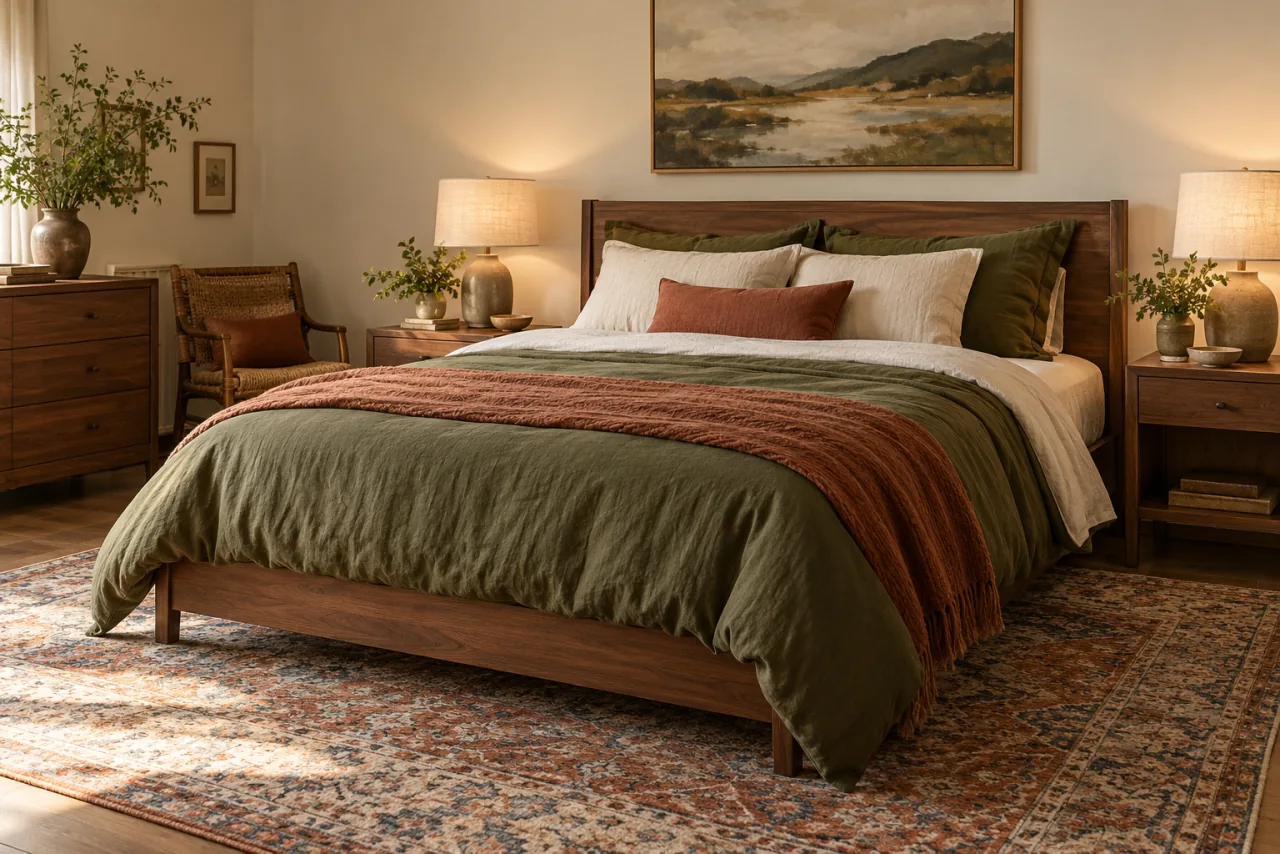
Golden or honey oak, common in older bedroom sets, can feel dated when it is surrounded by bright white bedding and pale gray walls. Instead of replacing it, change its company. Olive, rust, deep brown and warm cream textiles make the orange-yellow wood look intentional, while crisp white and cool gray make it look yellower.
A darker rug or a deep olive throw nearby gives the eye a resting point beside the lighter wood.
Try it without buying: Swap white pillowcases for any deeper earthy shade you have and look at the oak again in evening light.
Watch out: Covering every oak surface with fabric hides the problem rather than solving it. Keep some wood visible.
7. Lighten a Dark Wood Set
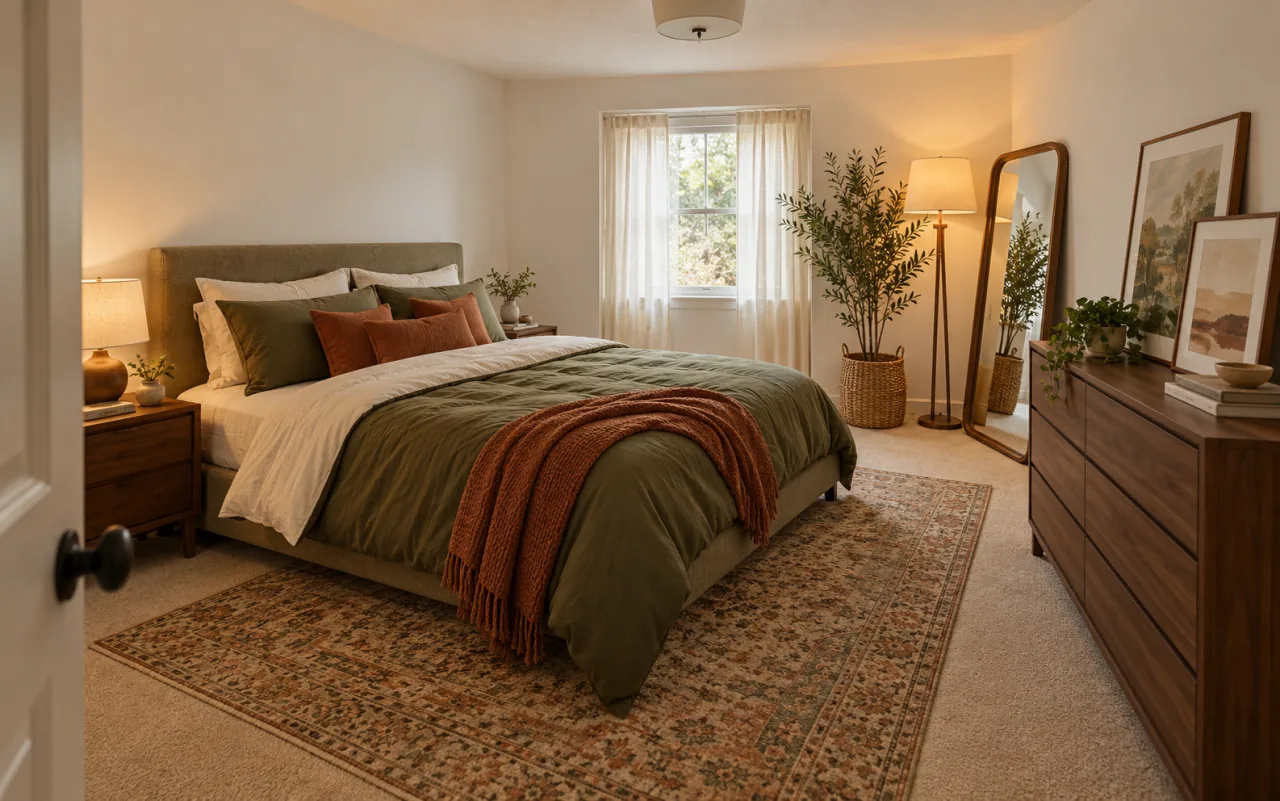
Espresso and dark cherry pieces can make a bedroom feel heavy, especially in small rooms or north-facing light. Balance them with lighter surroundings: warm cream bedding, a lighter rug and lamps with linen-colored shades. One lighter wood or woven piece, such as a basket, bridges the gap between dark furniture and pale textiles.
The goal is contrast around the wood, not on it, so the dark finish reads as rich rather than gloomy.
Try it without buying: Move your lightest bedding to the bed and clear the tops of dark furniture for a day to let the surfaces breathe.
Watch out: All-white surroundings can make dark wood look stark. Warm cream softens the contrast.
8. Use Earthy Textiles as a Buffer Around Existing Furniture
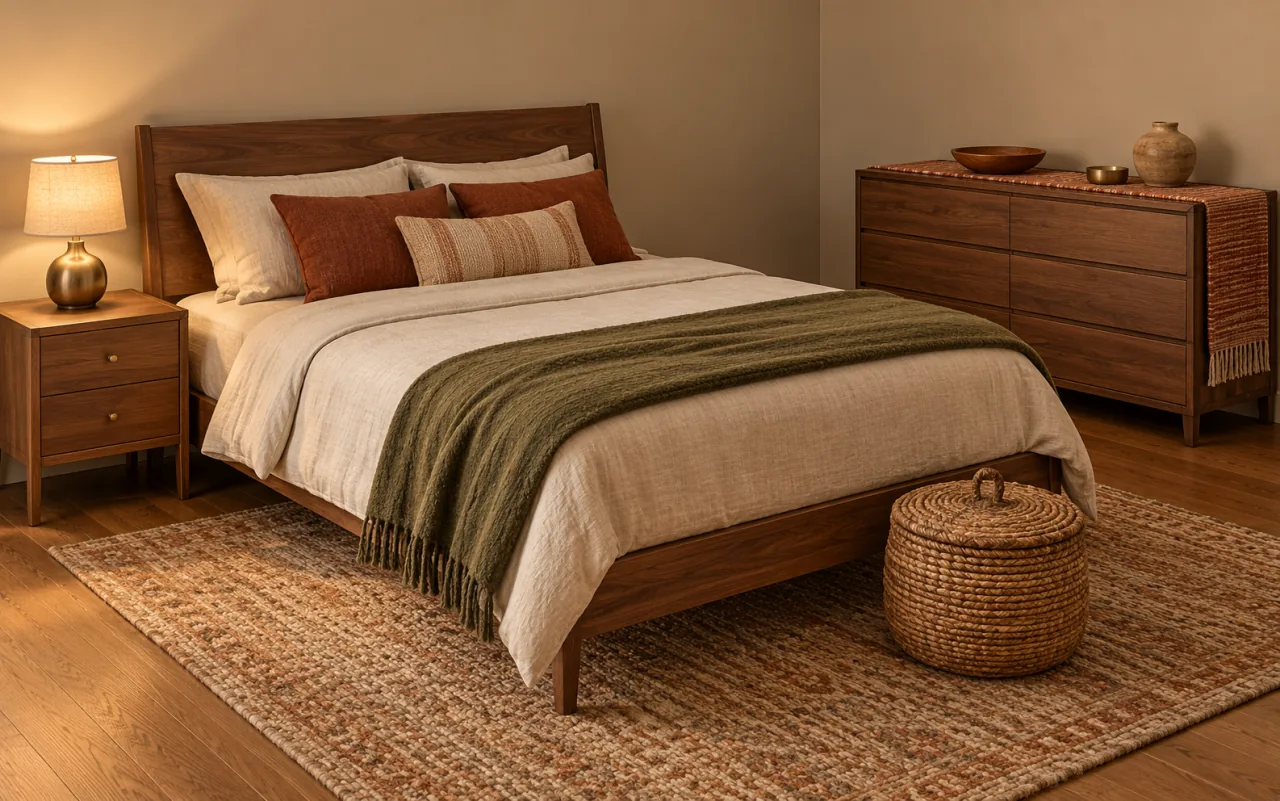
When two woods of similar tone touch — a bed frame against a nightstand, or a dresser on a matching floor — a textile between them keeps them from blurring together. A rust or olive throw across the foot of a wood bed, a woven runner on a dresser top or a rug under the bed all act as buffers.
This is how earthy textiles work around existing furniture: they separate, frame and add color without hiding the wood.
Try it without buying: Fold a scarf or table runner you own across the dresser top and step back to compare.
Watch out: A runner that covers the full dresser top hides the wood you are trying to show. Leave several inches of wood visible at each end.
9. Pair Smooth Wood with Nubby Textiles
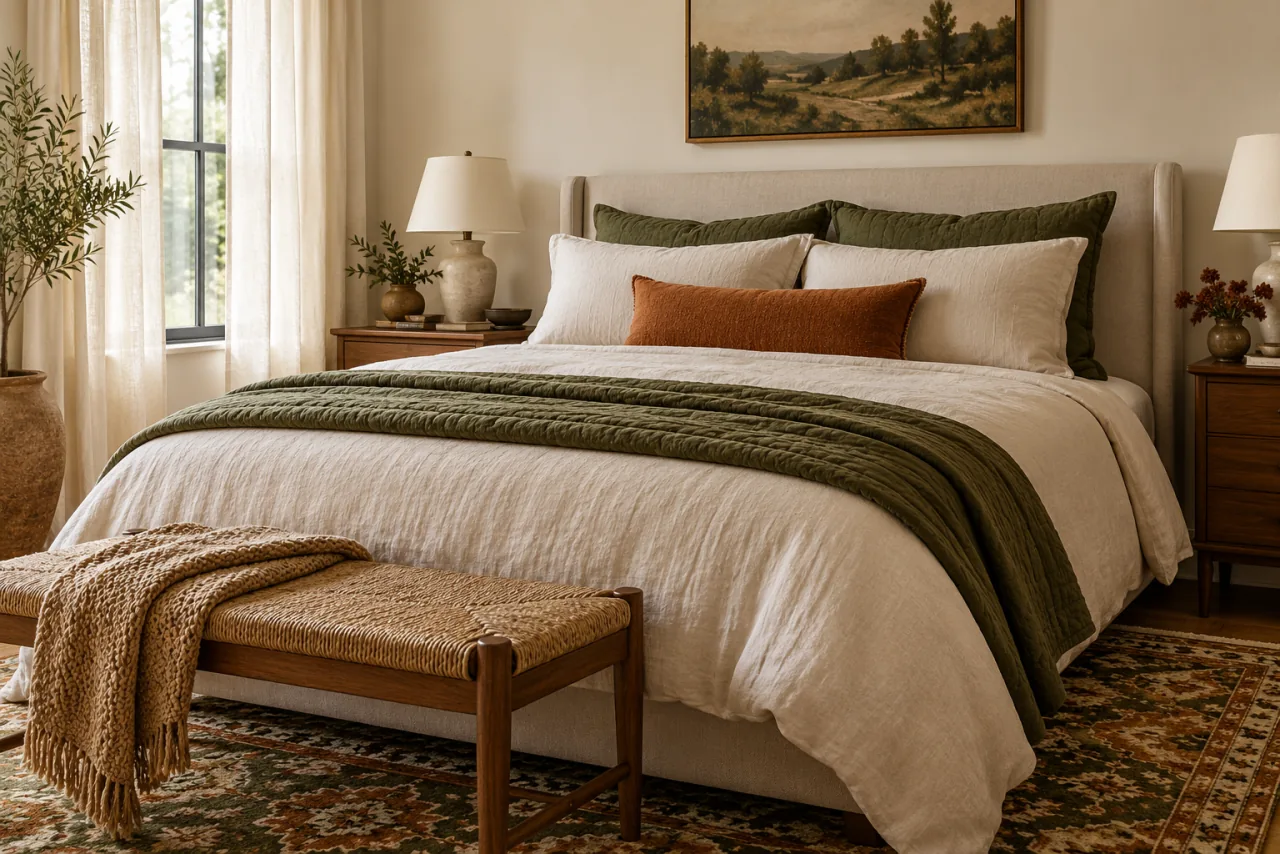
Most furniture is smooth and hard, so the eye looks for the opposite nearby. Chunky knits, waffle weaves, slubby linen and woven wool give the room a tactile contrast that makes wood look warmer by comparison. Place the roughest textures closest to the largest wood surfaces: a knit throw on a wood bench, a textured pillow against a wood headboard.
Try it without buying: Move your most textured blanket or pillow next to the largest wood piece in the room.
Watch out: Loose loops snag on rough wood edges and on pet claws. Tighter weaves last longer in high-contact spots.
10. Balance Heavy Pieces Across the Room
Wood furniture has visual weight. When the bed, dresser and a chest all sit along one side, the room feels tipped. Place the second-largest piece opposite or at a right angle to the bed so the weight spreads out. If the layout cannot change, balance the light side with floor-length curtains, a tall mirror or a large framed piece.
Try it without buying: Sketch the room on paper and shade each wood piece by size; move one piece if most of the shading sits on one side.
Watch out: Check door swings and drawer clearance before moving a dresser. Allow room to pull drawers fully open, often about 3 feet (91 cm) in front.
11. Add Woven Baskets as the Lightest Tone
Rattan, seagrass and willow baskets belong to the same natural family as wood but sit at the lightest end, which lifts a room full of mid-tone and dark pieces. They are also useful: a lidded basket at the foot of the bed holds spare blankets, and a smaller one beside a nightstand holds books or chargers.
Try it without buying: Bring a basket from another room and use it to hold the throw you keep on the bed.
Watch out: Open weaves catch on knit throws and shed fibers on dark floors. A fabric liner helps.
12. Add Brass-Tone Accents in Small Doses
A few warm metal touches make wood look richer because they catch light that wood absorbs. Two or three small pieces are enough: a brass-tone lamp base, a slim picture frame, a small tray or a set of drawer pulls. Brushed or aged finishes stay gentle; very shiny gold can look harsh beside matte wood.
If you replace pulls on existing furniture, measure the distance between screw holes first, since common sizes vary.
Try it without buying: Gather any warm metal objects you own and place one on each side of the room.
Watch out: Brass-tone does not always mean solid brass. Plated finishes may wear over time, so check care instructions before polishing.
13. Refresh the Finish Before Replacing Anything
Dull, dusty wood looks flat and cool; clean wood shows its color and grain. Dust with a soft, slightly damp cloth, dry it right away, and follow the care advice for the finish type. Light scratches can often be softened with a touch-up marker or wax stick in a close shade.
Warm white bulbs, around 2700K, then bring out the golden tones you have uncovered.
Try it without buying: Clean one drawer front thoroughly and compare it with the rest of the dresser.
Watch out: Silicone-heavy sprays can build up on some finishes. Test any product on a hidden area first, and skip it on antiques until you know the finish.
A Warmer Wood Bedroom Checklist
- Check the floor undertone and avoid near-match furniture.
- Let one wood tone lead and keep the total to about three.
- Group pieces with similar sheen; test polish on a hidden spot.
- Put a warm wood table near the bed, close to mattress height.
- Give mismatched nightstands one shared trait.
- Choose earthy textiles that suit the wood you already have.
- Separate similar woods with a throw, runner or rug.
- Place nubby textures next to the largest wood surfaces.
- Spread heavy pieces around the room and keep drawer clearance.
- Add two or three gentle brass-tone touches.
Common Questions
Can you mix different wood tones in a bedroom?
Yes. Let one tone lead, keep undertones related and separate similar pieces with textiles. Three tones is usually plenty.
What colors go with honey oak bedroom furniture?
Olive, rust, deep brown and warm cream work well. Bright white and cool gray tend to make honey oak look more yellow.
How do I make dark wood furniture feel less heavy?
Surround it with warm cream bedding, a lighter rug and fabric-shaded lamps, and add one woven or lighter wood piece.
Do nightstands need to match the bed?
No. They look best when they share one trait with each other or the bed, such as height, wood family or matching lamps.