The warm wood kitchens that fill inspiration boards usually come with custom cabinets, a long island and a renovation budget. The feeling they give off, though, comes mostly from smaller things: cream ceramics against wood grain, a faded runner on the floor, cutting boards leaning where someone actually cooks, and light that glows instead of glares.
This guide is about those smaller things. The 13 ideas below work with the cabinets, counters and floors you have now, whether they are honey oak, dark cherry or plain white laminate. Each one explains what to change, why it helps, and what to watch for in a room that also has to handle heat, water and daily cooking. Start by clearing the counters; most of the warmth arrives once there is room for it.
1. Edit Before You Add
A warm kitchen starts with less on the counter, not more. Small appliances, mismatched containers and stray mail create visual noise that no accessory can cover. Take everything off the counters, wipe them down, then return only what you use at least a few times a week. Appliances used once a month go into a cabinet or pantry.
The space you free up is where wood and ceramic accents will later read clearly instead of disappearing into clutter.
Try it without buying: Box up everything you are unsure about for two weeks; anything you do not reach for can be stored or donated.
Watch out: Hiding daily-use tools makes cooking slower. Keep the knife block, oil and salt within reach even if they are not decorative.
2. Work With Your Cabinet Wood, Not Against It
If you already have wood cabinets, they set the color story. Look at the undertone in daylight: orange (common in oak and many walnut-look finishes), red (cherry) or yellow (maple and pine). Accessories look best when they contrast with that wood rather than trying to match it. Cream, warm white and soft clay ceramics stand out against orange or red wood; a slightly darker wood board sits well against yellow maple.
Try it without buying: Hold a white plate, a cream mug and a wood cutting board against a cabinet door to see which contrasts best.
Watch out: Accessories in the exact same wood tone as the cabinets blend into them and look like an afterthought.
3. No Wood Cabinets? Add Wood at Three Heights
White, gray or painted kitchens can still feel warm. The trick is to place wood at different levels so the warmth spreads through the room: a cutting board or tray on the counter, wooden stool seats or a small shelf at middle height, and a wood bowl or bread box higher up. Three touches at three heights look intentional; one large board alone looks borrowed.
Try it without buying: Gather wooden spoons, boards and bowls from drawers and place them at counter, shelf and top-of-fridge height.
Watch out: Very yellow pine next to cool gray cabinets can look mismatched. Mid-tone woods are easier to pair.
4. Treat Cream Counters as Breathing Space
In a wood kitchen, a cream or white counter is the light band between upper and lower cabinets. When it stays mostly clear, the room feels balanced; when it is covered, the dark wood above and below closes in. Aim to keep roughly two-thirds of the counter open and push accessories toward the back corners and the ends of a run.
Cream counters also make warm accessories glow, so a few pieces go a long way.
Try it without buying: Take a phone photo of the counter from the doorway, push everything to the back corners, and photograph it again to compare.
Watch out: Glossy white counters show crumbs and water spots. A cloth and a small tray for wet items help keep the surface looking calm.
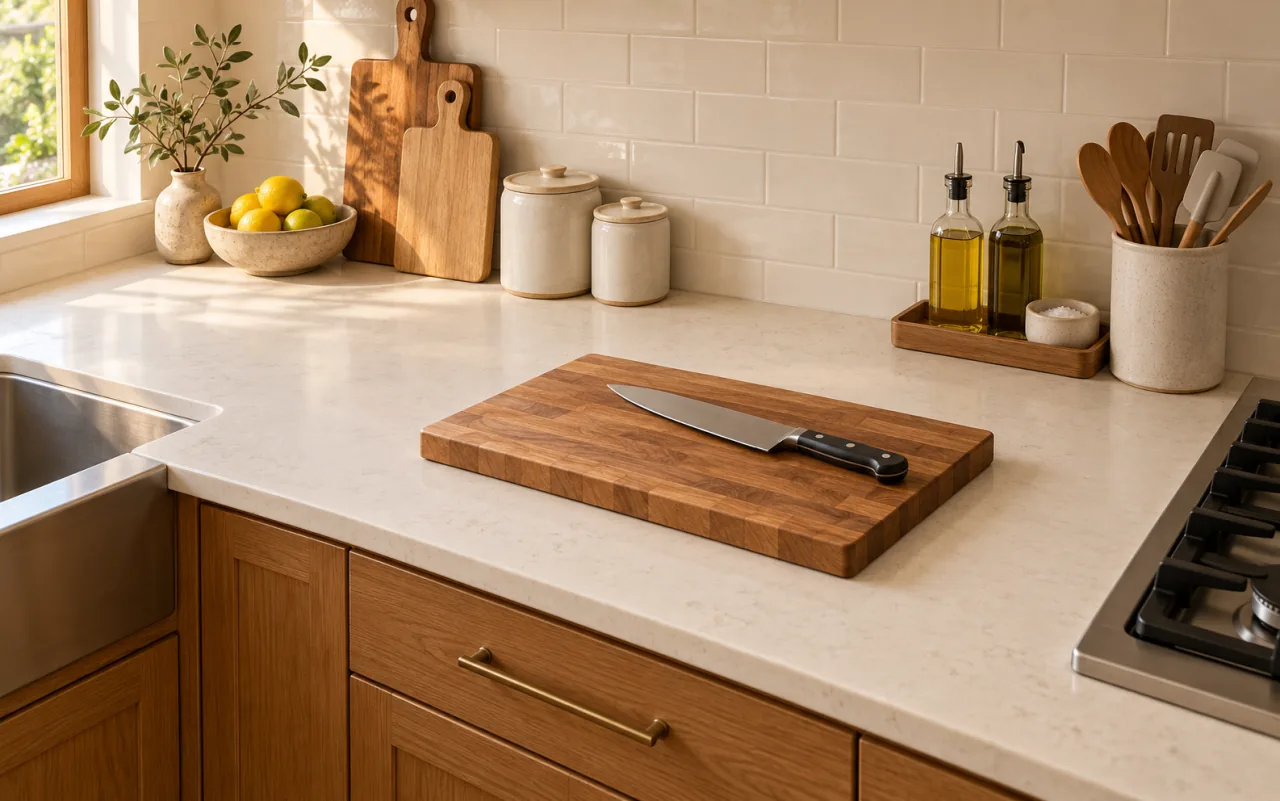
5. Lean Cutting Boards Where You Prep
Two or three cutting boards leaning against the backsplash are one of the easiest wood and ceramic accents, and they stay useful. Layer a large rectangular board behind a smaller round or paddle-shaped one, and mix wood tones slightly for depth. Place them in the prep zone, often between the sink and the range, so they come down easily when you cook.
Try it without buying: Pull boards from the cabinet and lean them in the prep corner instead of stacking them flat.
Watch out: Boards standing in splashes from the sink can warp. Keep them dry, and oil wood boards occasionally as their care instructions suggest.
6. Swap Plastic Containers for Cream Stoneware
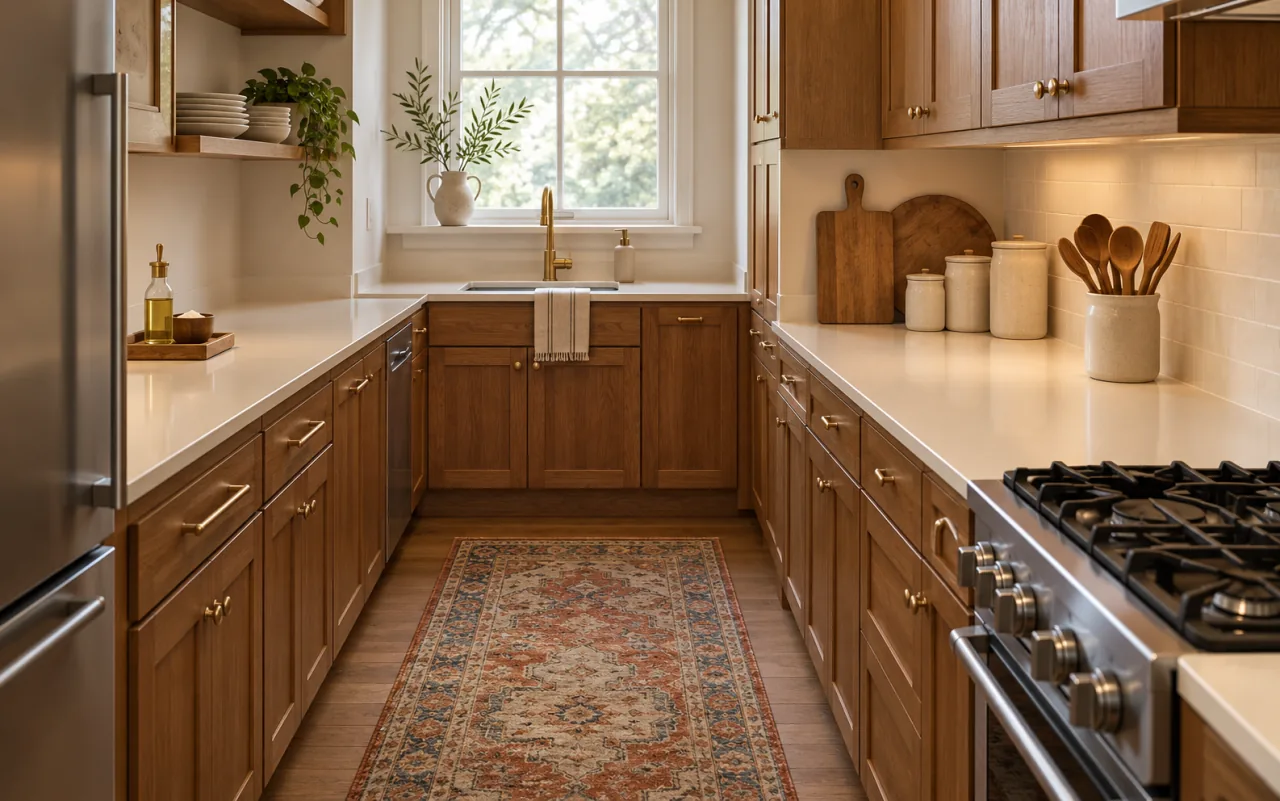
Cream or matte stoneware canisters and a utensil crock bring the ceramic half of the wood and ceramic pairing. Against warm wood cabinets, matte cream looks softer than shiny white. Group two or three canisters of different heights near the coffee or baking area, and stand wooden spoons in a crock near the range.
For dry goods, look for canisters with a sealing lid and a wide opening that fits a measuring cup.
Try it without buying: Decant flour or coffee into the best-looking jars or ceramic pitchers you already own.
Watch out: Not every decorative ceramic has an airtight seal. Check before storing ingredients that go stale quickly.
7. Corral Daily Cooking Essentials on a Wood Tray
A small wood or wood-look tray turns oil, salt, pepper and a spoon rest into one tidy group. It is a useful accessory first: you can lift the whole tray to wipe the counter. Choose one around 12 by 8 inches (30 by 20 cm) for a standard counter depth, and keep it within reach of the range but outside the heat zone (see the next idea).
Try it without buying: Use a sturdy cutting board or a plate as the base for the same group.
Watch out: Oil bottles leave rings on unfinished wood. Sealed finishes or a ceramic dish under the bottle wipe clean more easily.
8. Keep Heat Clearance Around the Range
Warm decor and open flames do not mix. Leave the counter directly beside the burners clear of wood boards, towels, paper and plants. NKBA planning guidance recommends at least 12 inches (30 cm) of landing area on one side of a cooking surface and 15 inches (38 cm) on the other; local requirements and the appliance manual may differ.
Many ranges vent heat at the back, so do not lean boards or canisters directly behind the burners. Follow the clearances in your range's manual.
Try it without buying: Move any decor within arm's reach of the burners to the other side of the sink.
Watch out: Towels draped over an oven handle can creep toward a gas flame or hot surface. Hang them on the handle farthest from the burners, or use a hook elsewhere.
9. Style Open Shelves with Everyday Dishes
Open shelves look warmest when they hold real, matching stacks: cream plates and bowls, a few glasses and one small plant or crock. Stacks of six to eight plates read as calm; many single items look cluttered. Keep the most-used pieces on the lowest shelf within easy reach and leave about a third of each shelf empty.
If you have no open shelves, a countertop plate rack or a shelf riser gives a similar look.
Try it without buying: Move your most-used cream dishes onto the lowest shelf and keep the mismatched pieces behind closed doors.
Watch out: Pieces you rarely use collect grease and dust. Shelves near the range need wiping more often.
10. Lay a Vintage-Style Runner Along the Work Aisle
A warm kitchen runner adds color and pattern to a room full of hard surfaces. A faded design in rust, brick red, cream and muted blue pairs naturally with orange-toned wood. In a galley or along an island, a runner around 2 to 3 feet (61 to 91 cm) wide that leaves a few inches of floor visible on each side looks proportional. Stop it a little short of the cabinet ends rather than letting it run past.
Try it without buying: Move a small rug from another room into the kitchen to test color and length.
Watch out: Thick runners can catch the dishwasher door or a cabinet door. Choose a low pile, use a nonslip pad, and pick one that is machine-washable or easy to spot-clean.
11. Let Tea Towels Carry the Textile Accent
Tea towels are a small, washable way to add muted vintage textiles. Look for linen or cotton in cream with a rust or faded blue stripe, and repeat one color from the runner. Hang one at the sink and one where you dry your hands, and keep spares folded in a drawer instead of piled on the counter.
Try it without buying: Sort the towels you own, keep the ones in your palette in use and move the rest to cleaning duty.
Watch out: Brand-new linen is often less absorbent until it has been washed a few times, so give it a few wash cycles before relying on it for dishes.
12. Add One Living Green
A single cut branch in a stoneware jug or a pot of herbs on the windowsill softens the straight lines of cabinets. Leafy branches often last longer in water than flowers, and they need little more than fresh water every few days. Most culinary herbs, such as basil, need a bright, sunny window to stay healthy.
Place greens near the sink or window, not beside the cooktop.
Try it without buying: Cut a few branches from your yard or a shrub you are allowed to trim and put them in a pitcher.
Watch out: Some cut plants and houseplants are toxic to cats and dogs; check the ASPCA plant list before bringing a new one home.
13. Warm Up the Light Without Rewiring
Light color changes how wood looks. Cool bulbs can make honey or orange wood look yellow and dull, while warm white bulbs bring out its depth. Bulbs labeled about 2700K to 3000K suit most kitchens: warm enough to flatter wood, bright enough for cooking. Check each fixture's bulb type and maximum wattage before swapping, and confirm dimmer compatibility if your fixture is dimmable.
Try it without buying: Swap one existing warm bulb from another room into the kitchen pendant and compare in the evening.
Watch out: Plug-in lamps on the counter should stay away from the sink and the cooktop, with cords that cannot be pulled into either.
Style the Kitchen You Already Have: A Checklist
- Clear the counters and return only items you use weekly.
- Identify your cabinet undertone and choose accessories that contrast with it.
- In a non-wood kitchen, add wood at three heights.
- Keep about two-thirds of each counter run open.
- Lean two or three boards in the prep zone, away from the burners.
- Group cream stoneware canisters and a utensil crock.
- Put oil and salt on a tray you can lift to clean.
- Check the range manual and leave landing space beside the cooktop.
- Lay a low-pile runner that clears the dishwasher door.
- Use bulbs around 2700K to 3000K in existing fixtures.
Common Questions
What colors go with warm wood kitchen cabinets?
Cream, warm white, soft clay, rust and muted blue work well. Cool gray and stark white can make orange wood look brassy.
Can I make a white kitchen feel warm without wood cabinets?
Yes. Add wood at several heights, choose cream ceramics, lay a vintage-style runner and switch to warmer bulbs.
Is it safe to keep cutting boards next to the stove?
Keep them out of the landing space beside the burners and away from rear vents. Your range manual lists the clearances that apply.
What size runner should I use in a galley kitchen?
Usually 2 to 3 feet wide, leaving a few inches of floor on each side. Measure the aisle and check that doors clear the runner.